
How Electrification Is Redefining EV Actuation
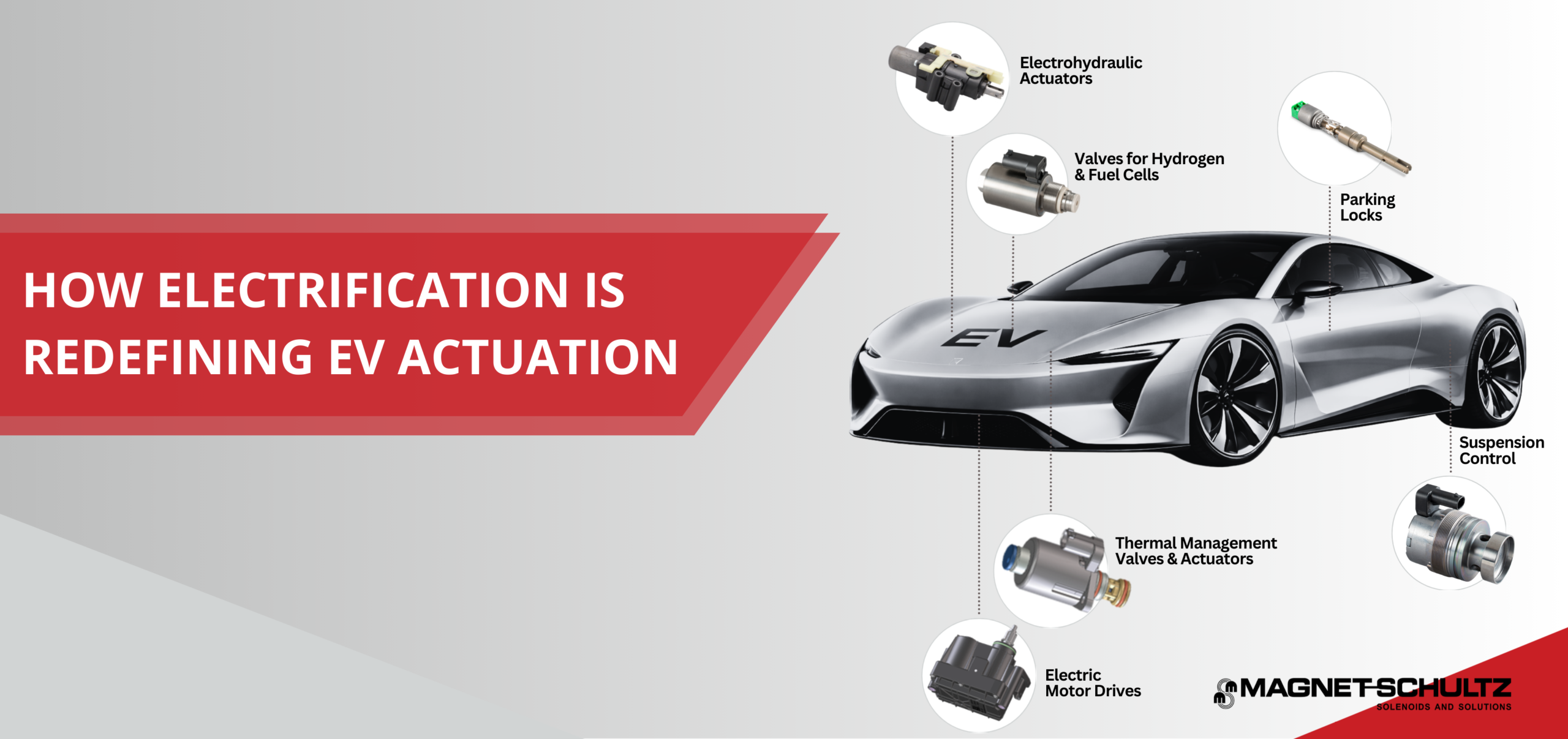
How Electrification Is Redefining EV Actuation
Electrification is transforming the automotive industry at an unprecedented pace. Battery Electric Vehicles (BEVs) and Fuel Cell Electric Vehicles (FCEVs) are reshaping vehicle architectures, pushing manufacturers to rethink everything from drivetrain design to energy management.
One of the most significant, yet often overlooked, changes is taking place within EV actuation systems. As electric vehicles become more integrated and software-driven, the components responsible for motion, control and safety must evolve. Electrification is not simply changing the power source of vehicles; it is redefining how actuation functions within them.
 The Shift Toward Smart Actuation
In conventional vehicles, actuators and solenoids were typically designed to perform straightforward mechanical functions, opening valves, engaging locks or activating hydraulic components. These systems often operated within isolated subsystems.
Electric vehicles, however, operate within highly interconnected architectures that combine electric motors, power electronics, thermal management systems and digital control platforms. Within these environments, actuators must do far more than move mechanical parts.
Here, smart actuation becomes critical. Smart actuators combine precise electromagnetic motion with sensing, electronic control and seamless system integration. They enable responsive, highly efficient control across vehicle subsystems, helping manage energy flows, thermal conditions and drivetrain behaviour.
New Engineering Demands in Electric Vehicles
Electrification introduces new engineering challenges that place greater demands on actuation technology. Thermal management, for example, has become a central focus in EV design. Batteries, inverters and power electronics must operate within narrow temperature ranges to maintain efficiency and longevity.
Simultaneously, modern EV architectures are increasingly built around integrated E-axle systems, where motors, gearing and power electronics are packaged into compact modules. These designs require actuators that are precise and responsive but also compact, durable and capable of operating within tightly integrated systems.
As a result, EV actuation technologies are becoming key enablers of vehicle efficiency, safety and system performance.
Supporting the Evolution of EV Actuation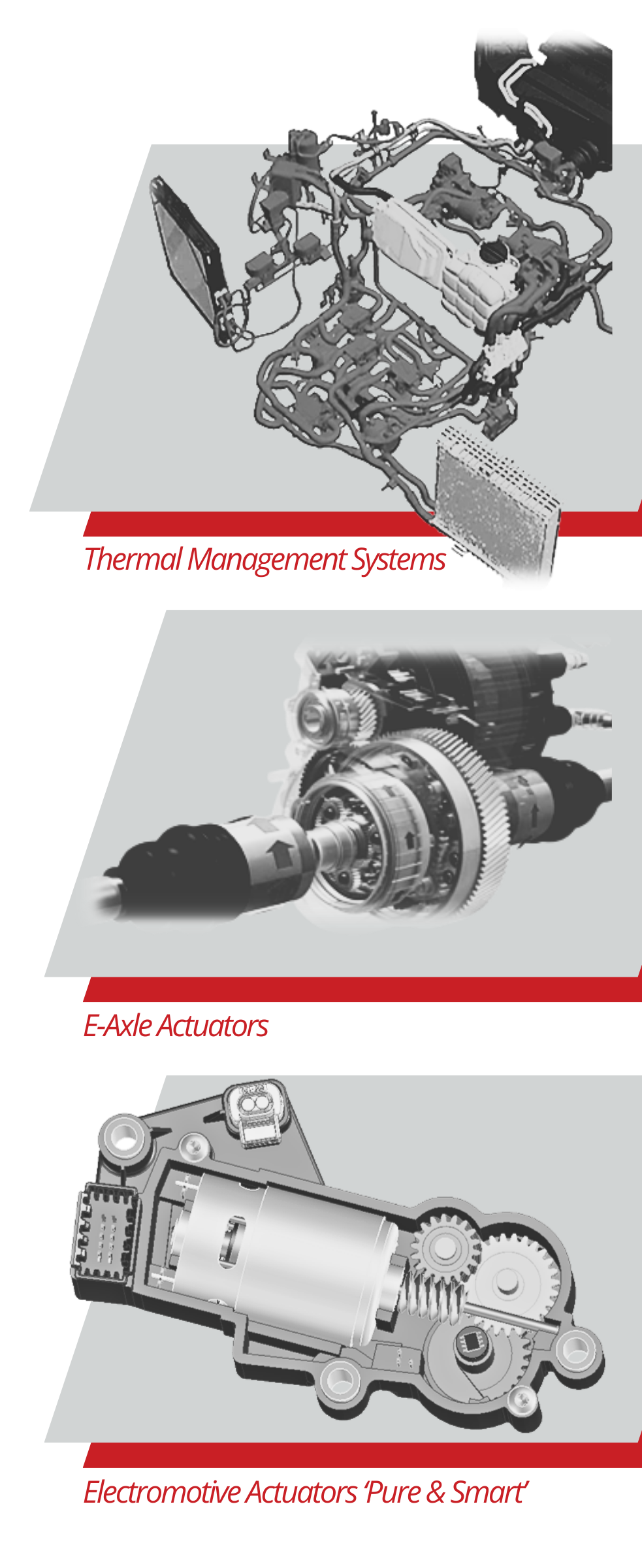
At Magnet Schultz, we are actively pioneering electromagnetic solutions that support the evolving demands of electrified mobility. These technologies enhance drivetrain control, thermal management, braking systems and integrated E-axle platforms across modern electric and hybrid vehicles.
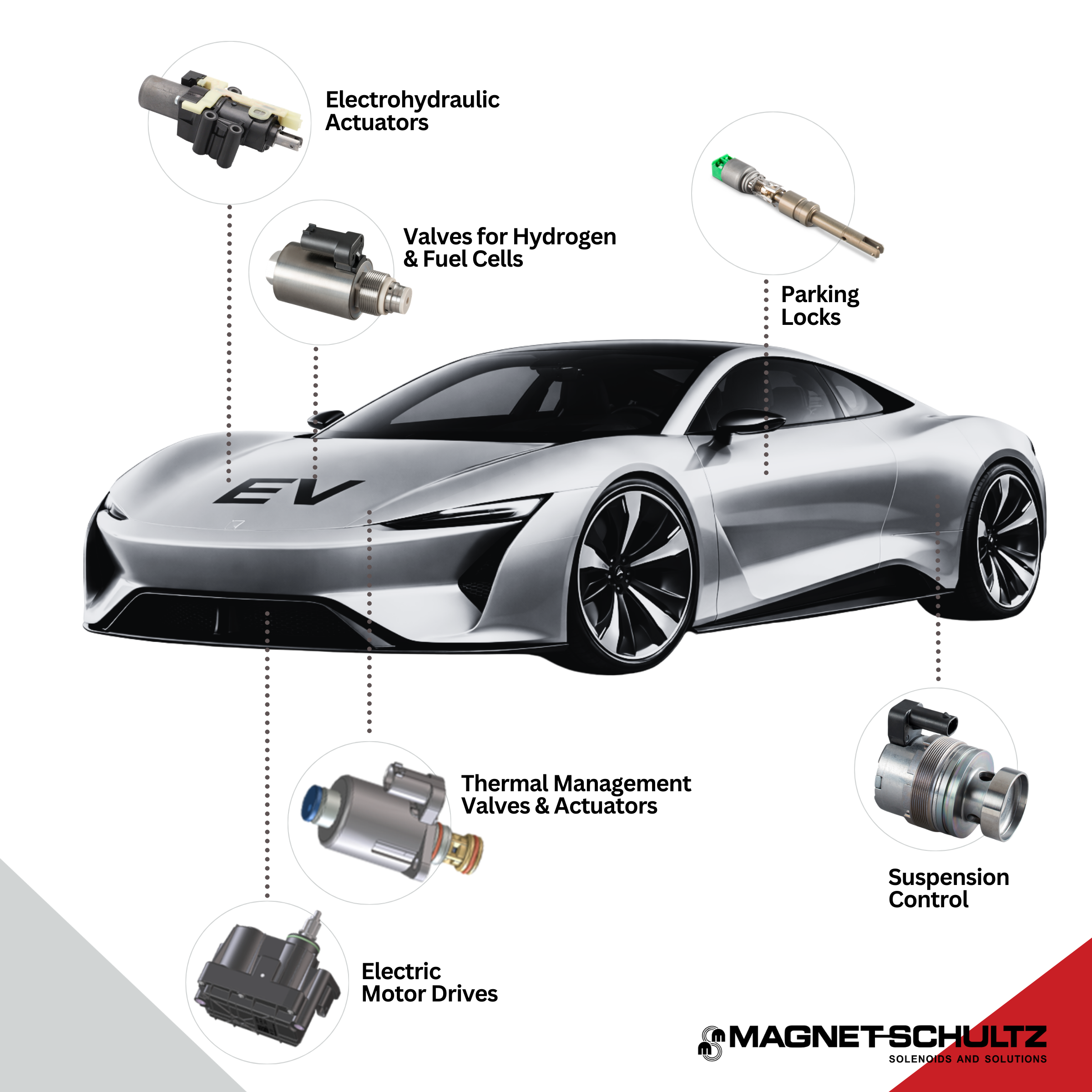
Examples include proportional valves designed for hydrogen and fuel cell systems, enabling precise hydrogen flow control and advanced coolant regulation. Expansion valves and locking magnets support thermal management systems that maintain optimal temperatures for batteries and power electronics.
We also develop solutions for electric drivetrains, including parking lock actuators, electric brake actuators with safety interlocks and disconnect units for drivetrain and battery systems. These systems are engineered for fail-safe operation and seamless integration within modern EV architectures.
The Future of EV Actuation
As electrification continues to reshape the automotive landscape, the role of actuation will only become more critical. Smart actuators are increasingly bridging the gap between electronic control systems and mechanical functionality.
By combining decades of electromagnetic engineering expertise with a technologically open approach that includes electromagnetic, electrohydraulic and electromotive solutions, Magnet Schultz continues to support the development of the next generation of EV actuation technologies powering modern electric mobility.
 sales@magnetschultz.co.uk
 +44 (0)1483 794700